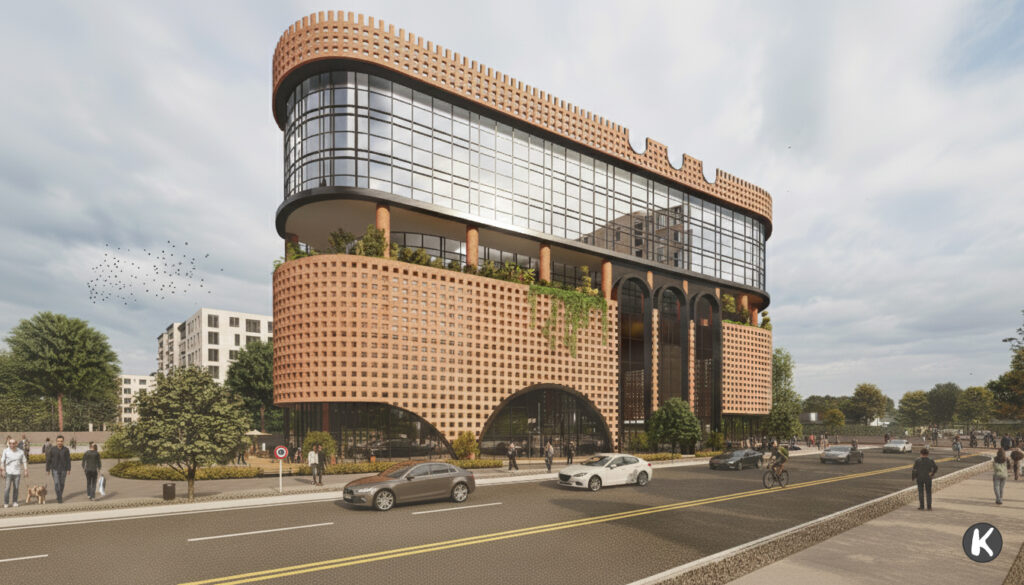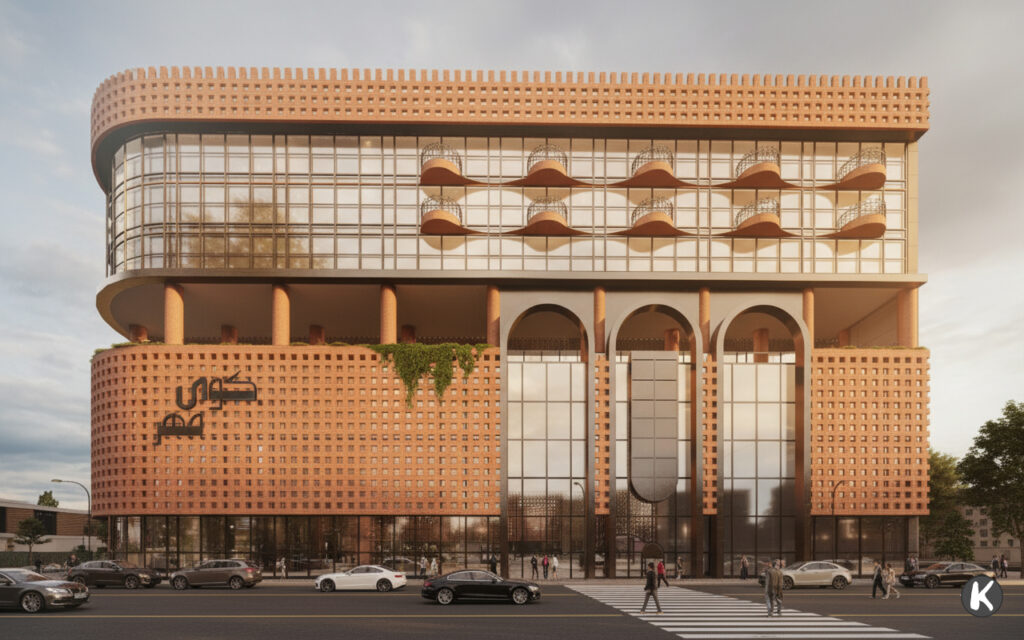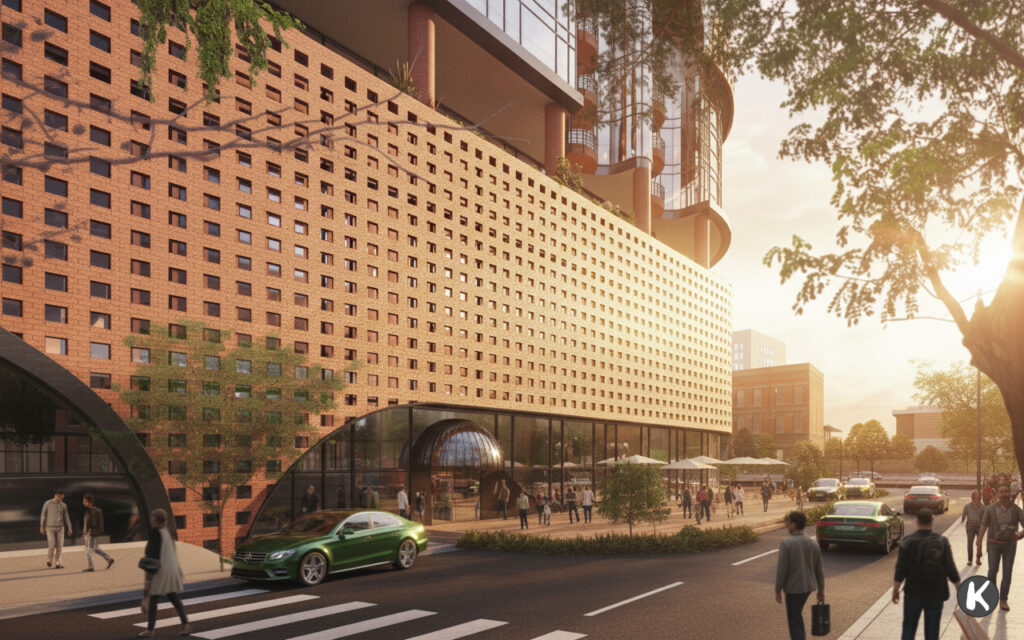
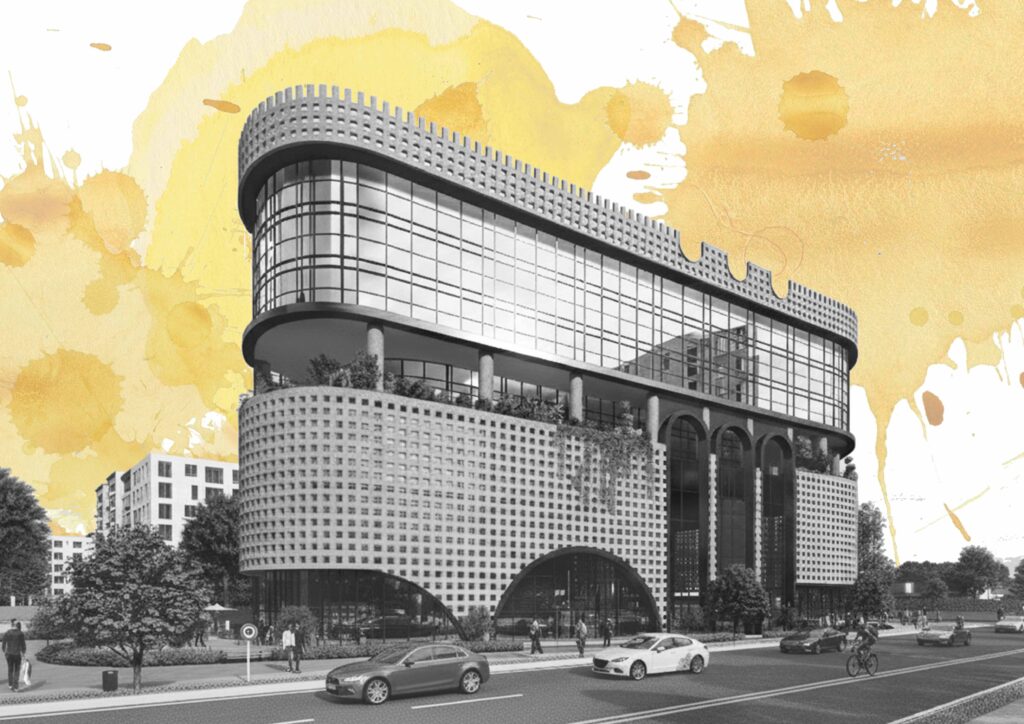
This multi-functional complex, located in Karaj, Iran, is conceived as a vibrant urban landmark combining hospitality, leisure, and cultural functions under one architectural identity. The design harmonizes contemporary geometry with traditional material expression, using brick as the main façade element — reinterpreted through perforated patterns and rhythmic arches that evoke a sense of depth, texture, and cultural continuity.
The building’s form is divided into distinct functional layers. The three upper levels host hotel apartments, designed to offer both privacy and comfort. These residential units are organized around an exclusive courtyard, a calm, semi-open garden space that brings natural light and greenery into the heart of the hotel zone. This courtyard acts as a quiet sanctuary above the bustling city — a modern reinterpretation of the traditional Persian garden, providing guests with a serene retreat within an urban setting.
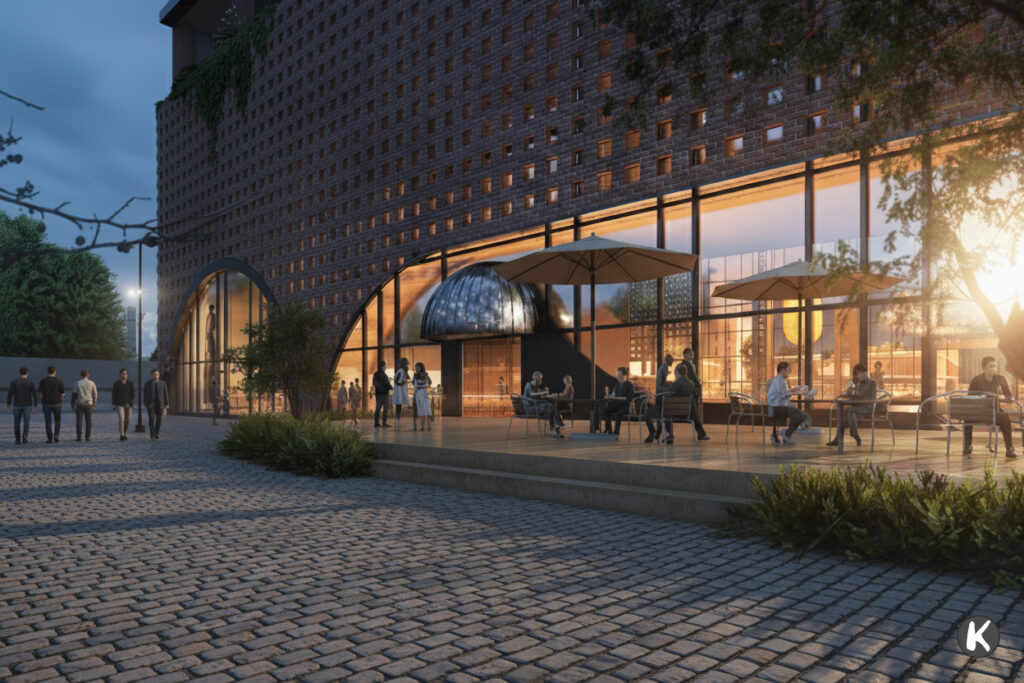
The ground floor serves as the building’s public interface, anchored by the main hotel lobby, a café, and a restaurant that open directly to the street, encouraging public engagement and pedestrian activity. This level also accommodates the lobbies and entrances for several key facilities:
- A gym and fitness center,
- A library,
- A small indoor children’s “wonderland”, and
- four large wedding and event halls located on the upper levels
The façade composition emphasizes verticality and rhythm through a combination of large glass panels, brick lattice screens, and tall arches. The lower levels are defined by brick screens that provide both privacy and ventilation for interior spaces, while the upper levels transition to a lighter, more transparent aesthetic with sweeping glass façades and elegant curved balconies. These balconies, subtly projecting from the glass surface, add movement and character to the elevation while offering panoramic views for the hotel apartments.
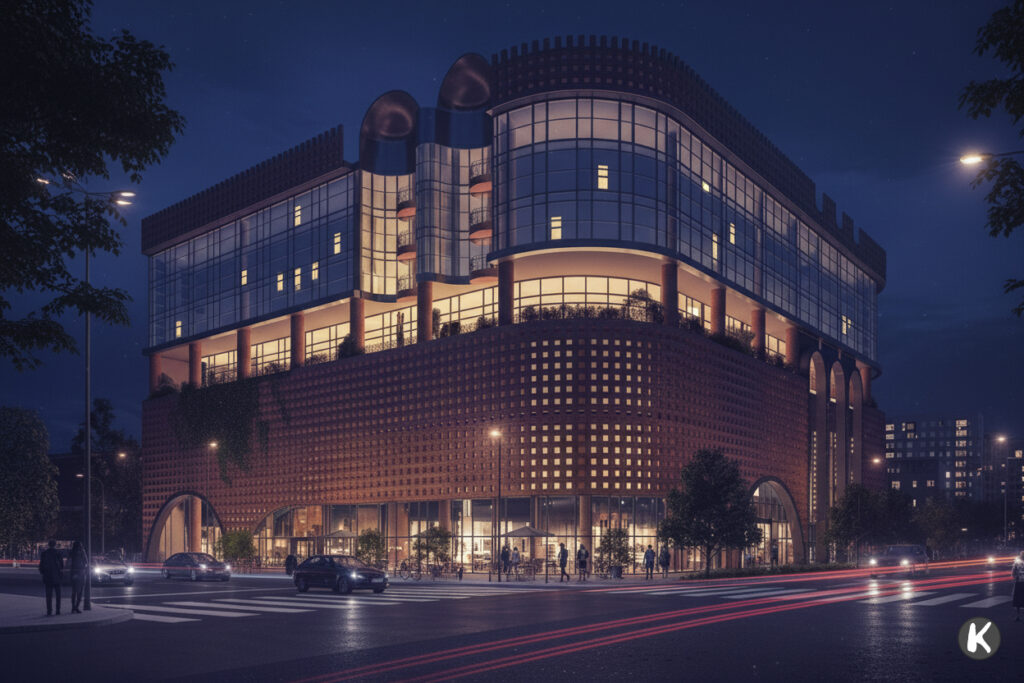
Architecturally, the building blends solidity and openness. The massive brick volume grounds the structure, while the recessed glass sections and open terraces introduce a sense of permeability and lightness. The curved corners soften the overall geometry, making the form more fluid and dynamic within its urban context. The integration of green elements — cascading vegetation from the terrace and courtyard — reinforces the building’s ecological and biophilic vision.
Overall, this project stands as a refined example of contemporary mixed-use architecture in Iran: a building that merges hospitality, leisure, and civic activity into one cohesive spatial experience. It celebrates traditional materials and proportions while employing modern construction logic — a bold, elegant, and culturally rooted addition to Karaj’s evolving skyline.